2010-08-29

Earthen Oven 飯舘村 8/29, 9/25

August 29 and September 25 helped with an earthen oven workshop led by Suzuki-san at Iitate Village (飯舘村) in Fukushima Prefecture.8/29
Build opening with firebricks

Form dome with wet sand

Earthen-sand mix

Cover with wet newspaper to separate sand from earth. Cover dome with earthen mix

Yoshi-kun and Kyle shaping oven

End of Day one

9/25
Cover thermal mass layer with an insulating layer of vermiculite, straw, and earth.

Hand-prints

Ideally, the earthen plaster slowly dries over several weeks to prevent drying cracks. Then, heat is slowly added to prevent expansion cracks. But we couldn’t wait.
Fire oven and bake pizzas

美味しいPizza

End of day two

2010-08-23

Natural Building in Thailand

Saw many examples of natural building in Thailand.
Thatch roofs are very common. The thatch roofing can be bought as shingles, and then lashed on to a frame.
One-room bamboo homes sold along the road.

Visited a natural building demonstration project sponsored by the king.
Bamboo frame plastered with a mix of soil, water buffalo manure, and cement.

2010-08-21

Jeff of Chiang Mai

On Friday, August 20th, Neil and I took the overnight train from Bangkok to Chiang Mai. The next morning, Jeff, a lecturer at a Chiang Mai University, met us at the train station.
Jeff with bamboo fish trap in irrigation channel
Jeff's home is a beautiful, small permaculture farm outside of Chiang Mai.
Water hyacinth, a fast growing accumulator of nitrogen and phosphorus, flourishes in the irrigation channel and is periodically removed and used as nutrient rich mulch on the adjacent garden beds.

2010-08-18

Herbal Hospital and Ecovillage in Thailand

Visited a hospital that concentrates on herbal medicine, and it's accompanying herbal medicine museum. We then visited the ecovillage that grows many of the herbs for the hospital.

2010-08-17

Neil Willman

August 17-24, visited Neil Willmann of Daruma Farm in Thailand.
Neil and his water baffallo

Neil and his wife, Su, also run a spa, Vimaya. I met Neil at the International Ecovillage Conference in Tokyo this past May. He'd like me to help teach a Permaculture course at his farm next spring.

2010-08-14

小さい削ろう会

August 14th, attended 小さい削ろう会 in Enzan, Yamanashi-Prefecture. Over the course of a week, two teams of carpenters, one Japanese and one from Europe, each built a small structure using only hand tools

2010-08-03

東京油田

August third, visited Tokyo Yuden, a company that collects used cooking oil in the Tokyo area and produces biodiesel.

2010-07-11

Takekomai (竹小舞) and Earthen Plastering

July 11th attended a takekomai (竹小舞) and earthen plastering workshop in Fujino, Kangawa.
Takekomai and earthen plaster
Architect Takahiro Yamada next to wood fiber insulation
Mr. Konuma (小沼親方), ninja plaster

2010-07-10

Paul Starr's "Lancaster Sweet Corn" in Tokyo JAPAN!

My buddy Paul Starr from Butler, Pennsylvania, gave me these seeds some years ago. I'm finally gettin' around to grown'em out. (actually in Fujisawa, about an hour from Tokyo.)

2010-07-05

Asian Rural Institute (アジア学院)

The evening of July 4th stayed at the Asian Rural Institute (アジア学院) in Nasu, Tochigi Prefecture. Asian Rural Institute trains young leaders from Asia and Africa in organic agriculture, rural planning, and leadership.
Wheat harvest

2010-07-04

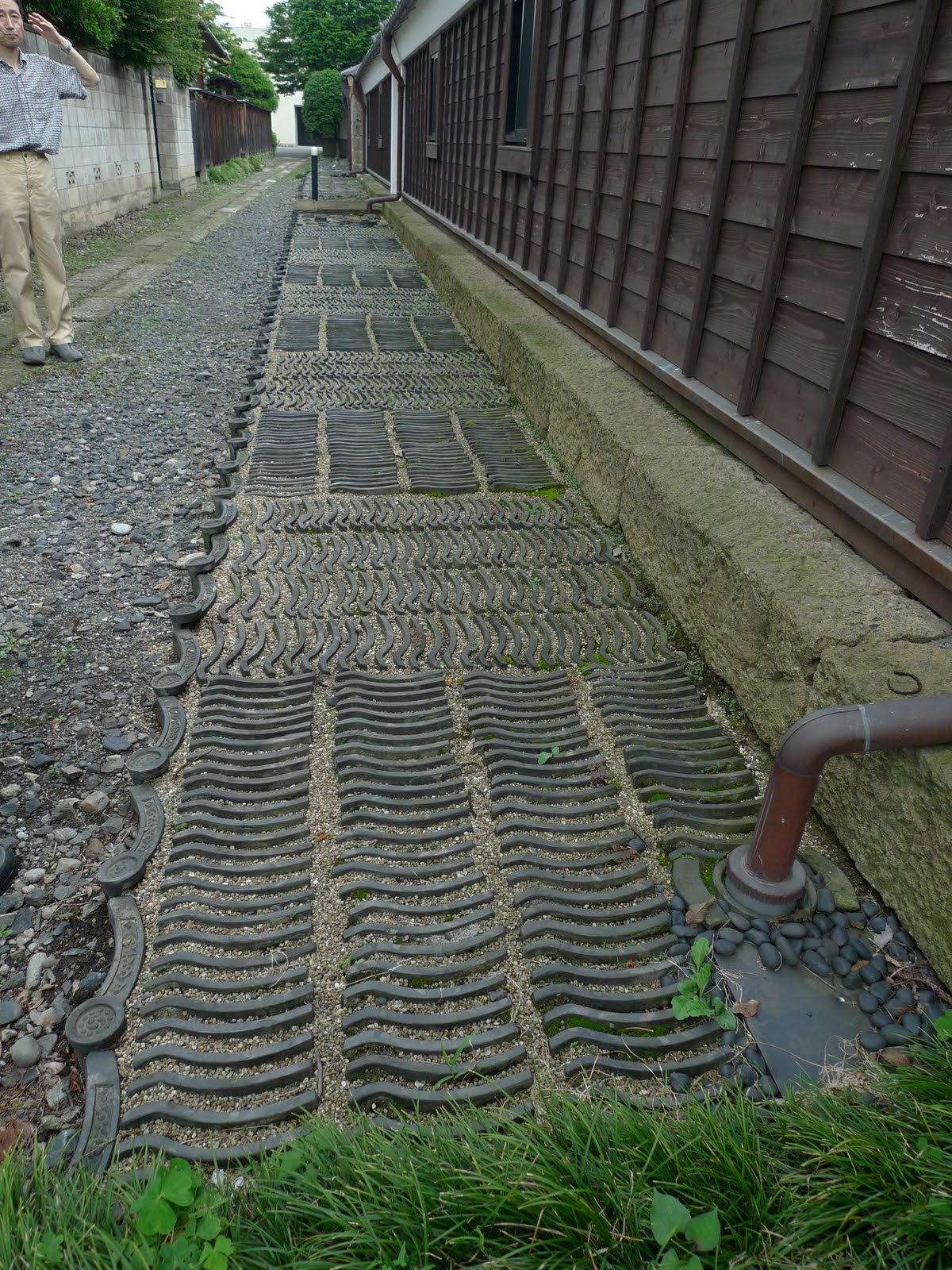
July 4th visited Tochigi, famous for its Kura (蔵), storehouses. Tochigi is also renown for its tile roofs. Old tiles used as pavers. Most of the hemp production in Japan is cultivated in Tochigi prefecture. The floor of this hallway is one, single board. Can you imagine the size of the tree?

Cordwood bridge

Miso Barrels

2010-06-27

小さな削ろう会

June 26 and 27, traveled to Enzan (塩山) in Yamanashi Prefecture to help with the preparations of Chiisana-Kezurou-Kai (小さな削ろう会). Chiisana-Kezurou-Kai is an event being held August 8-15. Two groups of carpenters, one from Japan and one from Germany, will each build a timber frame structure using only hand tools. Deer meat

2010-06-16

和の家「櫻井」

June 16 attended a Japan Minka Revival Association (日本民家再生協会) International Division meeting held at a beautifully renovated Japanese folk house called Wa-no-ie “Sakurai” (和の家「櫻井」). Wa-no-ie “Sakurai” hosts a day care for children and elderly and also a number of other events. This November, the Japan Minka Revival Association’s International Division is cohosting an event at Wa-no-ie “Sakurai”. The theme is building with earth.

2010-06-13

Matsuzaki (松崎)


June 13 visited Matsuzaki (松崎) on the Izu Peninsula (伊豆半島). Matsuzaki is famous for tiled earthen walls, known as Namako-kabe (なまこ壁). It is also the birthplace of Chohachi (長八) (1815-1889), Japan’s most famous Kote-e (鏝絵) artist. Kote-e are colored reliefs made using trowels.

2010-06-09

土佐漆喰


June 7-9 traveled to Hokkaido to help Noda-san, a professional plasterer from Urakawa, Hokkaido, with the finish coat of Tosa-shikkui (土佐漆喰) on the walls of Square One, Toby and Maiko's straw bale house near Asahikawa, Hokkaido. Noda-san also call up Horiguchi-san, a young but experienced plasterer from Kyoto. 

2010-06-06

民家学校

June 5-6 attended the Minka (民家) course sponsored by the Japan Minka Revival Association (日本民家再生協会). "Minka" means folk house in Japanese. On Saturday, we helped with the renovation of a minka in Yamanashi Prefecture. Last fall I helped with the rethatching and making the bamboo base for the earthen plaster walls. This time we plastered the finish coat with Keisodo (珪藻土), a plaster described in a previous posting. On Sunday, we visited several renovated Minkas in the morning. Structure of thatch roof. Irori (囲炉裏), charcole pit. Silk worms. In the afternoon, we attened a lecture given by Amamiya-san (雨宮氏), a carpenter who uses traditional tools and refrains from using power tools as much as possible. Shed built by Amamiya-san.