
 We then visited the ecovillage that grows many of the herbs for the hospital.
 We then visited the ecovillage that grows many of the herbs for the hospital.
 Neil and his water baffallo
 I met Neil at the International Ecovillage Conference in Tokyo this past May. He'd like me to help teach a Permaculture course at his farm next spring.
 Over the course of a week, two teams of carpenters, one Japanese and one from Europe, each built a small structure using only hand tools
 August third, visited Tokyo Yuden, a company that collects used cooking oil in the Tokyo area and produces biodiesel.
 Takekomai and earthen plaster
 Architect Takahiro Yamada next to wood fiber insulation
 Mr. Konuma (小沼親方), ninja plaster
 My buddy Paul Starr from Butler, Pennsylvania, gave me these seeds some years ago. I'm finally gettin' around to grown'em out. (actually in Fujisawa, about an hour from Tokyo.)
 Asian Rural Institute trains young leaders from Asia and Africa in organic agriculture, rural planning, and leadership.

 Tochigi is also renown for its tile roofs.
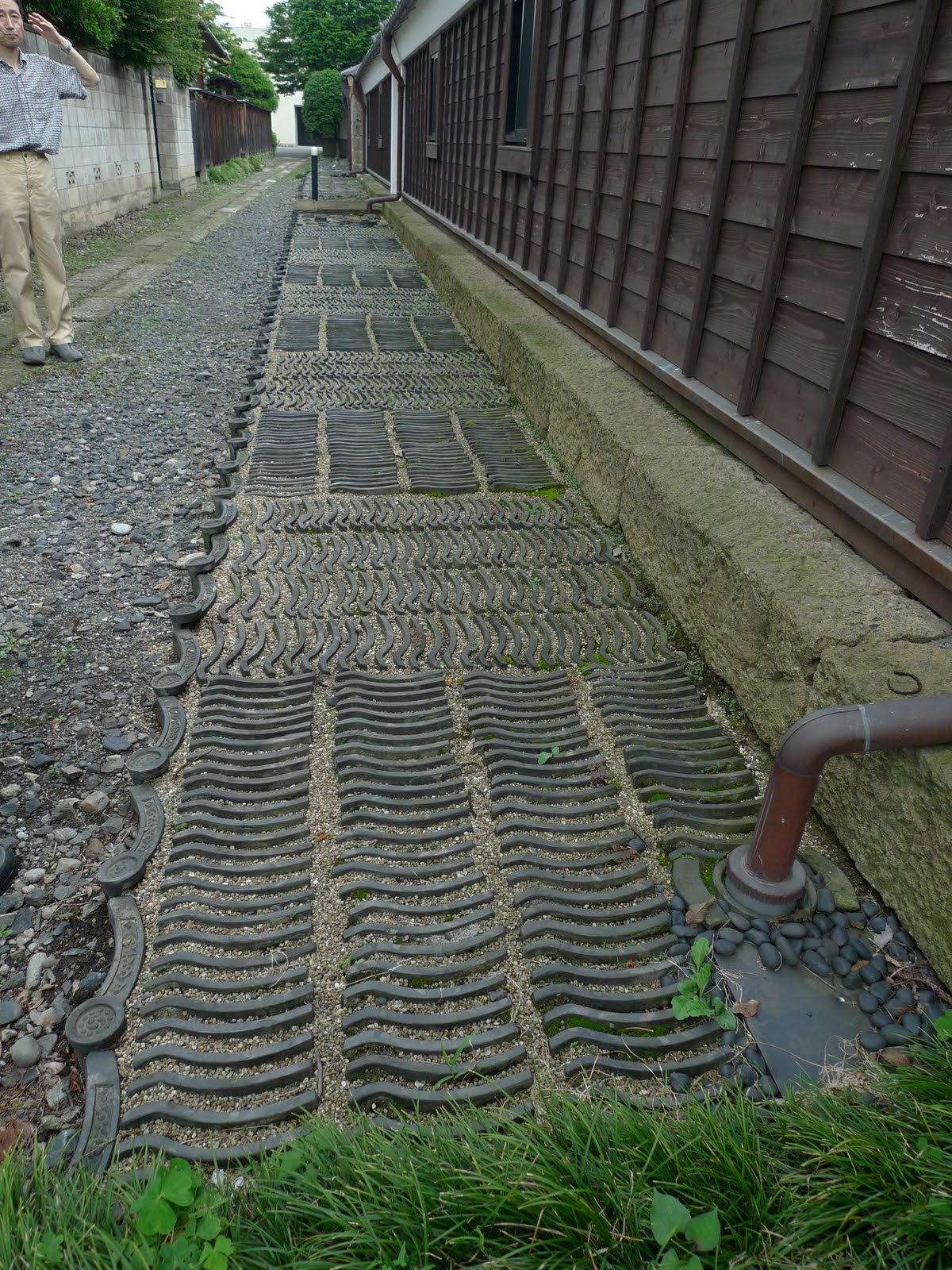
  Old tiles used as pavers.
  Most of the hemp production in Japan is cultivated in Tochigi prefecture.
  The floor of this hallway is one, single board.
  Can you imagine the size of the tree?
  Cordwood bridge
 Miso Barrels
 Two groups of carpenters, one from Japan and one from Germany, will each build a timber frame structure using only hand tools.
  Deer meat
 Matsuzaki is famous for tiled earthen walls, known as Namako-kabe (なまこ壁).
  It is also the birthplace of Chohachi (長八) (1815-1889), Japan’s most famous Kote-e (鏝絵) artist.
  Kote-e are colored reliefs made using trowels.
 Noda-san also call up Horiguchi-san, a young but experienced plasterer from Kyoto.
 Structure of thatch roof.
  Irori (囲炉裏), charcole pit.
  Silk worms.
  In the afternoon, we attened a lecture given by Amamiya-san (雨宮氏), a carpenter who uses traditional tools and refrains from using power tools as much as possible.
  Shed built by Amamiya-san.
 As explained in a previous post, Iitate received a government grant to build a model eco-home.
  Last December we built the west wall of a detached studio using straw bales.
  The home utilizes a number of environmental and experimental features.
  The hygrothermal environment of the home is being monitored and the data is displayed real-time by computer.
 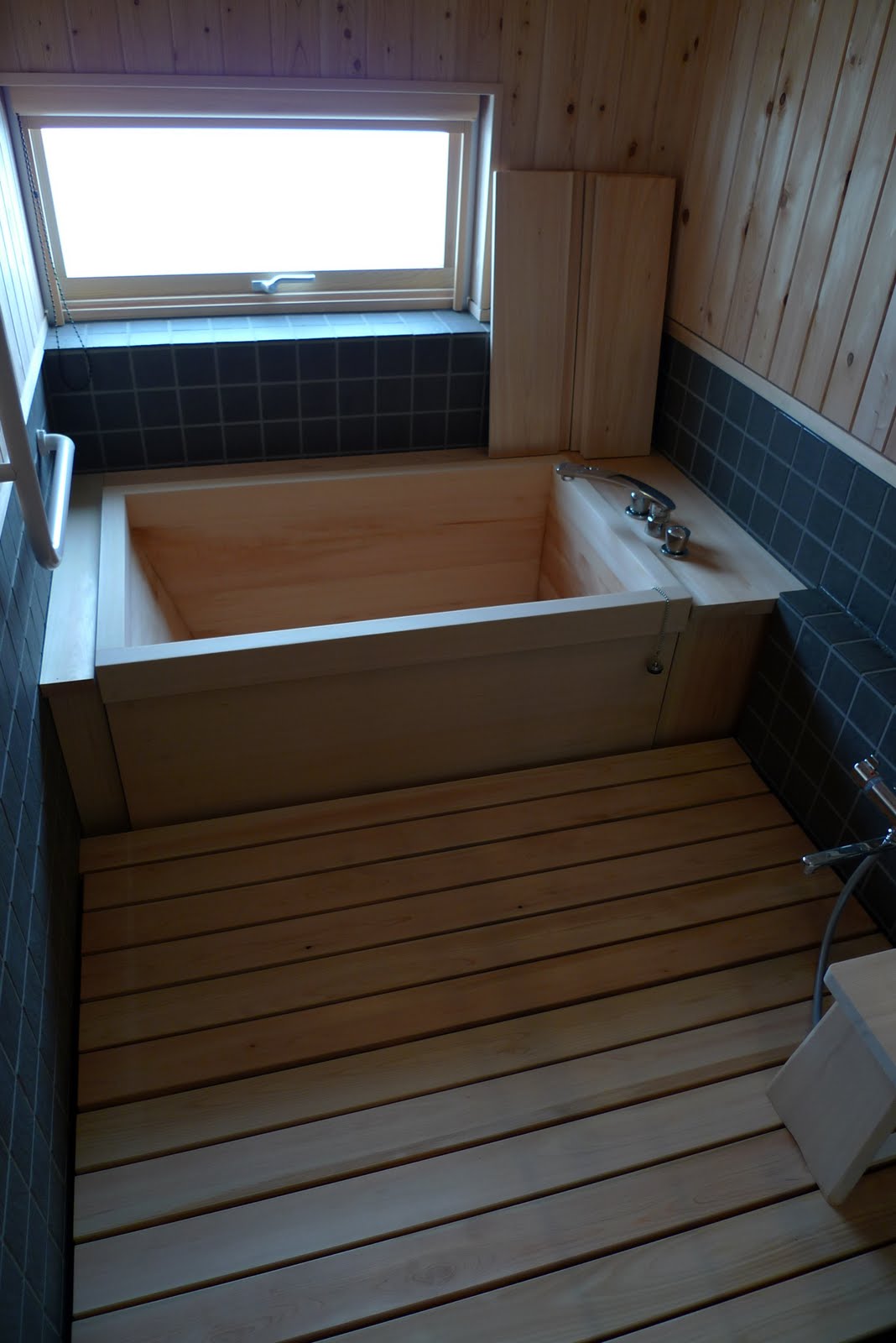 Japanese Cypress bathtub
 One part of the class involved drawing a floor plan and interior elevation of the home we're surveying.
 May 6 attended a lime plastering workshop taught by Yawata-Oyakata (八幡親方).
 Ingredients
消石灰(hydrate lime) 20kg
つのまた糊(seaweed glue powder) 475g
麻すさ(hemp fibers) 400g
水(water) 適量(appropriate amount)
2.20キロの消石灰と約500グラムのつのまた糊をから合わせる(乾いている状態で混ぜる)(mix the hydrate lime and glue powder dry)
3.適量の水を足す(mix and add water as needed)
4.麻すさを千切って、消石灰に足す。(break up the clumps of hemp fiber and add to lime)
5.完全に混ぜたら、塗れます。(plaster)
 Three things I love about plastering. (1) It's practical and useful. (2) It's an art. And (3), it physical.


